Submit solution
The solution submission portal is open all year-round. Use the form to share the initiatives you’re developing with fellow Game Changers. Submissions can range from early ideas to projects in progress or fully scaled solutions.

The solution submission portal is open all year-round. Use the form to share the initiatives you’re developing with fellow Game Changers. Submissions can range from early ideas to projects in progress or fully scaled solutions.

Complete your award submissions before 2 November to compete for one of the TAC 2026 Awards. All entries are reviewed confidentially by the TAC experts and jury and will not be shared on the Solutions Repository portal.
Discover the theme for The Aviation Challenge 2026: Collective Momentum. As TAC celebrates its fifth anniversary, this year's challenge brings airlines and industry partners together to accelerate operational efficiency through collaboration, shared learning and measurable action.
Participants in The Aviation Challenge are committed to finding new ways to reduce the industry’s footprint and help move more sustainable air travel forward. Looking ahead, the goal is to expand participation and deepen collective impact.












-02.png)







2025 Winner: Best Showcase Flight
In 2025, KLM organized 28 showcase flights as part of The Aviation Challenge to test a range of initiatives. One of them was to explore a critical question for aviation sustainability: How can passenger engagement help accelerate the adoption of Sustainable Aviation Fuel (SAF)?
While SAF is widely recognized as a key pathway to reducing aviation emissions, passenger awareness and participation remain limited. KLM used these showcase flights as a live testing environment to better understand how to inform, engage, and motivate passengers to take part in SAF initiatives.
Testing Incentives and Awareness Strategies
To explore how passengers respond to sustainability initiatives, KLM tested a combination of incentives and education.
One key initiative was a SAF priority boarding pilot. Passengers who chose to contribute to SAF were offered priority boarding as a tangible benefit, creating a direct link between sustainable action and passenger experience.
To support this, KLM launched a dedicated SAF information website, helping passengers understand what SAF is, why it matters, and how they can contribute. This was reinforced through a short SAF video shown in the inflight entertainment system, extending the message beyond the booking journey and into the onboard experience.
Together, these efforts were designed to make SAF more visible, understandable, and actionable for passengers.
Measuring Impact
The campaign reached passengers through a targeted email sent to 3,044 travelers. Of those, 2,421 opened the message, resulting in an open rate of nearly 80%, a strong indicator of interest and engagement. Yet only 716 people clicked on the link, so we have a major step to take in terms of action.
While awareness increased significantly, SAF purchases did not rise at the same rate during the showcase flights. This highlights a key challenge. Even when passengers are informed and engaged, converting that awareness into action requires additional drivers.
On the operational side, delivering 28 showcase flights required extensive coordination across teams and introduced communication complexities. Despite this, the initiative generated strong internal engagement, with cockpit and cabin crews expressing enthusiasm about participating in a large-scale sustainability experiment.
For more information, visit The Aviation Challenge website.
2024 Winner: Best Team Collaboration
Garuda Indonesia, in collaboration with Rekosistem, has launched an impactful initiative called "Zero Waste to Zero Emissions.” This program underscores the airline's commitment to responsible waste management while actively promoting environmental awareness among employees and stakeholders.
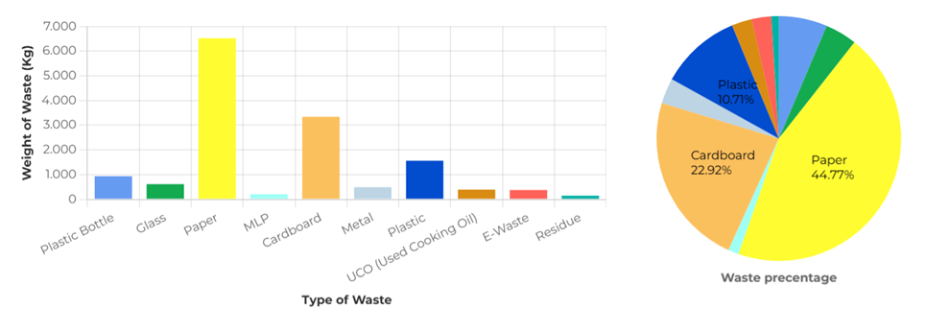
Dashboard for Monitoring Total Weight of Waste (Kg) x Type of Waste from Employee in 2024
A Sustainable Approach to Waste Management
As a national flag carrier, Garuda Indonesia is dedicated to pioneering sustainable aviation. Through our “Zero Waste to Zero Emission” initiative, we are taking bold steps to minimize waste, reduce carbon emissions, and promote eco-friendly operations. From adopting sustainable aviation fuel and enhancing fuel efficiency to implementing waste reduction programs on board and across our supply chain, we are committed to making air travel and business operation more responsible.
Garuda Indonesia has implemented a structured waste management system aimed at reducing landfill contributions while fostering employee engagement. The solution encourages responsible waste sorting and recycling within the company premises, ensuring that waste materials are repurposed effectively.
Through the partnership with Rekosistem, the airline has introduced educational programs and workshops to enhance employee awareness. This structured approach not only improves waste sorting efficiency but also fosters a culture environmental responsibility across the workforce.
Additionally, Garuda Indonesia has recently launched Waste Challenge Competition on March 2024 for employees, spearheaded by the internal team, Corporate Quality, Safety and Environmental Management. This competition aims to incentivize and recognize employees actively engaged in waste sorting, environmentally responsible.
On-Site Waste Management
Garuda Indonesia has also streamlined waste collection by implementing drop point facilities at its headquarters, allowing for more efficient waste management. Instead of transporting waste to external locations, this approach enables immediate sorting and recycling, further minimizing the environmental footprint.
By eliminating unnecessary transportation and improving waste collection efficiency, the airline can enhance its sustainability strategy while maintaining smooth operations. Small refinements in waste management process contribute significantly to long-term environmental impact.
Measuring Impact
To ensure accountability and track progress, Garuda Indonesia utilizes key environmental and operational metrics:
Garuda Indonesia's “Zero Waste to Zero Emission” solution highlights how structured waste management can support sustainability efforts. By the implementation of waste collection, educating employees, and utilizing advanced tracking tools, the airline ensures that waste reduction aligns with their environmental goals. Garuda Indonesia is committed to implementing sustainable practices that contribute to long-term environmental responsibility for generations to come. Together, we aim to make measurable progress toward a more sustainable world.
For more information, visit The Aviation Challenge website.
.jpg)
2024 Winner: Best Scaled GroundOps Solution
Air France has made significant strides in reducing its carbon footprint by transitioning its ground service equipment (GSE) from traditional fuel-powered models to electric alternatives. As of 2024, 70% of its GSE fleet in France is fully electrified. This initiative focuses on key equipment, including:
How Does This Reduce Environmental Impact?
Why Biofuels Help Reduce Environmental Impact?
Air France recognizes the importance of transitional solutions in achieving its short-term sustainability targets. To reduce its environmental impact while working toward full electrification, the airline is incorporating biofuels into its ground operations.
Focus on Air France-Owned Equipment at French Airports
The electrification initiative specifically focuses on Air France’s owned equipment, which is used primarily at French airports. By concentrating on the equipment that has the highest energy demand, Air France ensures that its solution directly addresses the largest sources of ground-based emissions.
There are some key environmental benefits at airports
Measuring The Impact
Air France’s move toward an electric ground fleet is more than just an operational shift: it represents a meaningful step toward decarbonizing aviation. While much of the industry's sustainability focus is on aircraft emissions, ground service equipment (GSE) plays a crucial role in reducing overall environmental impact.
By electrifying GSE and integrating biofuels into ground operations, Air France is:
Additionally, this dual approach of electrification and biofuel use allows Air France to make immediate sustainability gains while working toward full electrification. Noise reduction, waste minimization, and improved scalability further solidify this effort as a holistic and impactful environmental strategy.
As aviation moves toward a net-zero future, ground operations cannot be overlooked. Air France’s commitment to electrification and alternative fuels highlights how every part of the industry must evolve to create meaningful change.
For more information, visit The Aviation Challenge website.
2024 Winner: Best Approach to Scaling SAF ( Sustainable Aviation Fuel)
Kenya Airways is making progress in aviation decarbonization through the development of local Sustainable Aviation Fuel (SAF) production in Africa. Although Africa is one of the largest suppliers of SAF feedstocks globally, the continent currently lacks local SAF production capabilities.
Kenya Airways is focused on establishing local SAF production facilities, creating regulatory frameworks, and investing in necessary infrastructure. By working to eliminate the technological and financial barriers that hinder local companies from entering the SAF market, they aim to make SAF more accessible and promote it as a sustainable long-term solution for reducing aviation emissions in Africa.

Reducing Aviation's Carbon Footprint with Local SAF
By leveraging Kenya's energy infrastructure, the airline aims to increase access to more affordable SAF for other airlines. This approach not only reduces emissions associated with both the production and transport of fuel but also alleviates the environmental impact of importing SAF from distant locations.
Furthermore, it establishes a reliable and sustainable fuel source for airlines operating within Africa. An essential component of this initiative is the development of supportive policies.
In 2024, Kenya Airways played a key role in establishing the National SAF Committee, which is responsible for evaluating and updating Kenya's renewable energy policies to formally incorporate SAF. This initiative aims to secure long-term government backing, facilitating the scaling of SAF adoption throughout Kenya and potentially across the region.
Developing a Sustainable SAF Supply Chain
Kenya Airways is taking a holistic approach to SAF development, ensuring that both fuel production and feedstock cultivation align with sustainability goals. A major element of this strategy is land allocation for energy crops, in partnership with Kenya Forestry.
Measuring the Impact
Kenya Airways’ local SAF production initiative is delivering tangible environmental, economic, and social benefits, reinforcing its commitment to reducing aviation’s carbon footprint.
As SAF production scales, this model could serve as a blueprint for sustainable fuel development worldwide, helping airlines reduce their carbon footprint while ensuring long-term fuel security.
For more information, visit The Aviation Challenge website.
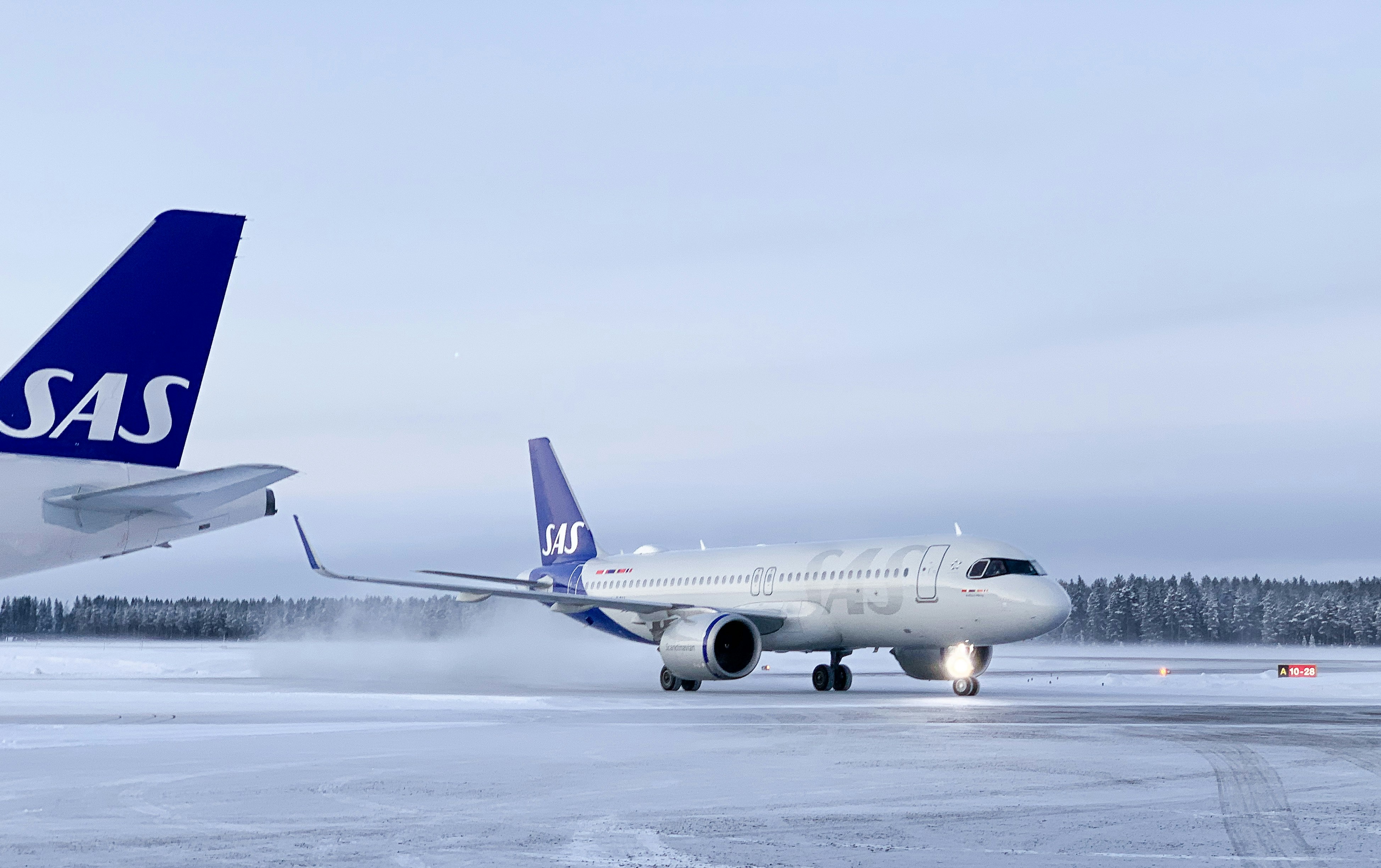
2025 Finalist: Best in-depth article or report
Aviation fuel often enters sustainability discussions as a carbon issue, but FuelTrack CPH, an advanced fuel monitoring campaign under the EU-funded ALIGHT project, started from a more local question: what kind of fuel are aircraft actually burning on the ground, and how does that affect air quality around the airport? Because aviation fuel comes from different crude oil sources and refining processes, its composition is not always the same. Even when conventional jet fuel still meets standard quality requirements, small differences in properties such as aromatics, sulfur, and hydrogen content can still affect emissions, especially the particle pollution released during ground operations.
To better understand that variation under real operating conditions, Scandinavian Airlines (SAS) took part in FuelTrack CPH. Working with the German Aerospace Center (DLR) and Copenhagen Airport, the campaign built a dataset that linked fuel samples from individual aircraft and the airport fueling system with real-time emissions measured during taxi. In doing so, it moved the discussion beyond fuel as a climate issue alone and toward fuel quality as a practical air-quality issue as well.
Connecting fuel samples, plume measurements, and aircraft data
The campaign relied on three core and interlinked components within airport operations:
Delivering these three components required a coordinated division of roles across the campaign partners.
Together, these roles allowed the campaign to move beyond testbench assumptions and into real operating conditions.
Measuring The Impact
Results
Over the two-week campaign, the project collected 55 fuel samples from 27 airports worldwide and paired them with 344 aircraft plume measurements across 16 SAS aircraft and five engine types. The resulting dataset reflected the operational complexity of real airport environments, where fuel origin, aircraft technology, and engine configuration all vary simultaneously.
Early observations suggested that fuel composition could meaningfully influence emissions during taxi operations. Fuel sampled directly at Copenhagen Airport showed lower aromatic content and higher hydrogen content than fuel carried on incoming aircraft on average, while emissions data revealed noticeable variation even among similar aircraft and engine types.
For more information, visit The Aviation Challenge website.
2025 Winner: Most Impactful Solution FlightOps
Air Europa implemented an integrated flight optimization approach that combines AI-powered OptiClimb climb management, performance-based aircraft allocation, and real-time flight planning using updated operational and meteorological data. The initiative targets reductions in fuel burn and emissions while improving operational performance through coordinated technical and procedural changes.
Implementation Process: Fleet-wide Deployment of AI-Driven Climb and Flight Planning Systems
In 2025, Air Europa transitioned its integrated flight optimization strategy from pilot phase to full deployment across its Boeing 737 and 787 fleets. The implementation combined three operational components: OptiClimb technology for climb phase adjustments, performance-based aircraft allocation, and real-time flight planning integrating live meteorological and aircraft performance data.
The rollout required coordinated action between flight operations, maintenance, and performance engineering teams to align flight procedures, aircraft performance parameters, and system interfaces. AI-driven climb optimization recommendations were embedded into standard flight planning workflows, with procedural updates integrated into the flight management system. Dedicated crew training ensured full familiarization prior to fleet-wide standardization.
By October 2025, more than 95% of flights were executed using AI-supported climb optimization within dynamic flight planning processes. The transition established the solution as standard operating practice across scheduled operations, delivering a reported 1.5–2.5% reduction in fuel burn per flight and a 1.2% improvement in on-time performance under variable weather conditions.
Measurable Impact: Network-Scale Environmental and Efficiency Results
Environmental Impact
Between November 2024 and October 2025, the full implementation of the integrated flight optimization process generated an estimated annual saving of 3,000 tons of fuel, corresponding to more than 10,000 tons of CO₂ emissions avoided. OptiClimb contributed average fuel savings of 80 - 120 kilograms per flight, depending on aircraft type, route, and meteorological conditions. More than 60,000 flights across the network applied AI-guided climb recommendations and real-time flight planning updates during the challenge period. Climb-phase efficiency improved by 2.1%, with smoother climb profiles also contributing to engine life preservation.
Operational and Financial Impact
Operational data show an average reduction of 0.5 minutes in flight time per sector. The combined efficiency gains translated into annual cost savings exceeding €3 million. Reported improvements also included enhanced punctuality and reliability. All results were validated through the airline’s fuel monitoring system and corroborated by the performance engineering team.
Practical Lessons: Scaling Data-Driven Optimization
In the Spring of 2025, this innovation was in initial implementation. By the Fall of 2025, it was fully deployed and embedded into standard operations across the Boeing 737 and 787 fleets, demonstrating a structured transition from limited application to network-wide integration.
This innovation underlines the role of continuous flight data analysis and cross-functional collaboration in sustaining reductions in fuel burn, CO₂, NOx, CO, and UHC, alongside punctuality and cost improvements. It also illustrates a feasible pathway for scaling AI-supported flight optimization from pilot phase to operational standard under validated monitoring.
For more information, visit The Aviation Challenge website.
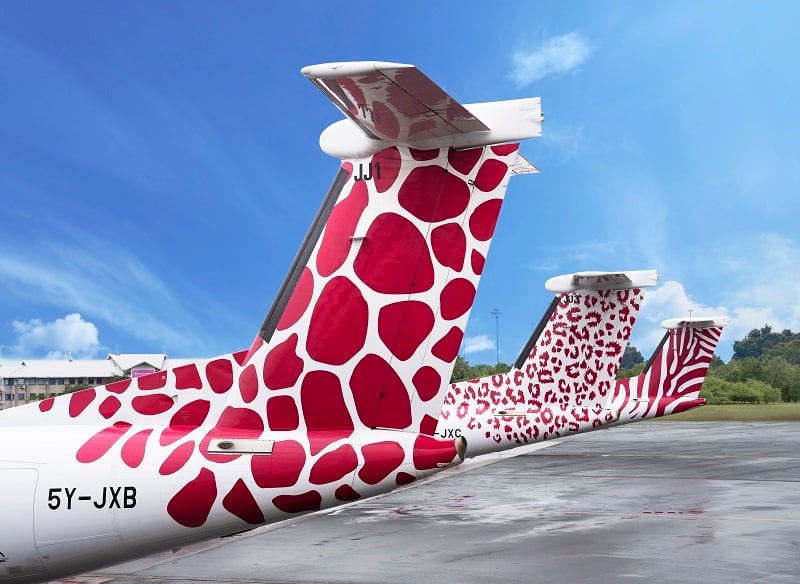
2025 Winner: Most Compelling Story
Jambojet initially organized beach cleanups along the Kenyan coast to remove plastic waste from coastal environments. However, the effort remained linear, as the collected waste was sorted and ultimately discarded. Through the collaboration with Plastiki Rafiki club, a non-profit student-led club at the International School of Kenya (ISK), the initiative evolved from simple waste collection into a small circular system linking environmental action with community participation, demonstrating how plastic waste could be repurposed instead of disposed of.
Plastic waste collected from beach cleanups and Jambojet’s flight operations was transformed into upcycled items such as fridge magnets and keychains by ISK students from Plastiki Rafiki club working with artisans from the Mathare community in Nairobi. To ensure the continuous supply of the plastic, employees from Jambojet were encouraged to bring waste plastics from their houses, and Progressive Welfare Association of Malindi (PWAM), partnership with Jambojet, ensured continuous coastal cleanups, supporting the recycling process.
Overall, there have been over 1,000 kg of plastic diverted from landfills. 10 ISK students gained hands-on sustainability experience, and 15 Mathare artisans earned income themselves by contributing to the sustainability initiative. Every magnet or keychain handed to a passenger represents a cleaner ocean and a more connected community, proving that Jambojet has successfully shifted the initiative from normal beach cleanups to innovative circular movement.
Multi-Stakeholder Involvement in the Initiative Transformation Process
To expand the initiative beyond isolated cleanup activities, Jambojet engaged multiple stakeholder groups across the airline’s operations and surrounding communities. ISK students from Plastiki Rafiki contributed ideas for repurposing plastic waste, while artisans from the Mathare community in Nairobi transformed collected plastics into upcycled items such as magnets and keychains.
Within the airline, Jambojet employees participated by collecting plastic waste and volunteering in cleanup activities. At airports, passengers were invited to take part through transparent recycling bins where plastic bottles could be deposited for souvenir manufacturing. By connecting students, local artisans, employees, and passengers within a single recycling process, the initiative demonstrated how collaborative action can turn waste management into a shared sustainability effort.
Community Participation as a Driver of Circular Initiatives
The partnership of Jambojet with Plastiki Rafiki illustrates how sustainability initiatives can gain traction when multiple stakeholder groups are actively involved. By combining the ideas of students, the craftsmanship of artisans from the Mathare community, and the participation of employees and passengers, the initiative shows how small-scale actions can contribute to broader environmental awareness and local economic opportunities.
The experience also encouraged Jambojet to explore additional reuse initiatives, such as producing bag tags from retired seat covers and laptop sleeves from repurposed billboards. More broadly, the case offers insight for the aviation sector by demonstrating how waste reduction efforts can be connected with community participation and circular reuse practices. It suggests that sustainability initiatives can extend beyond operational measures by engaging employees, passengers, and local communities in practical reuse activities.
For more information, visit The Aviation Challenge website.
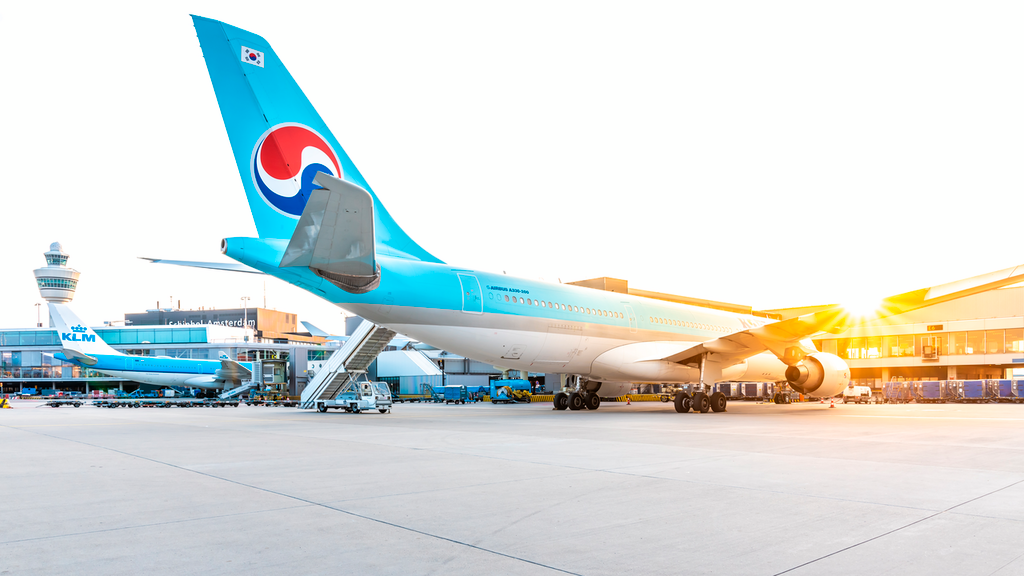
2025 Winner: Data & Insights Pioneer
Accurately estimating aircraft payload is a long-standing operational challenge in aviation. Traditional planning methods rely on historical averages, which can fall short on routes with highly variable passenger profiles. These inconsistencies often lead to imprecise fuel loading, where even small inaccuracies in weight estimation can result in unnecessary fuel burn. To address this, Korean Air introduced an AI-based Payload Prediction System designed to bring greater precision to payload forecasting. By analyzing real-time passenger reservation data, the system improves accuracy while reducing reliance on manual planning processes. In doing so, it directly addresses one of the most immediate levers for reducing fuel consumption: aligning aircraft weight as closely as possible to actual demand.
Improving Fuel Efficiency through Data-Driven Payload Prediction
The AI-based system uses machine learning models trained on detailed reservation data, including ratio of passenger nationality, age group, and travel itineraries to calculate expected baggage weight. By identifying patterns across these variables, the system generates more accurate payload predictions ahead of each flight.
This shift from manual estimation to data-driven forecasting allows Korean Air to align fuel loading more precisely with actual aircraft weight. By reducing the need to carry excess fuel, the airline minimizes unnecessary weight on board, which in turn lowers fuel consumption across each flight.
With improved prediction accuracy, Korean Air reduced per-flight payload deviation by 34.2%, demonstrating how more precise planning can translate directly into operational efficiency and emissions reduction.
Measuring Impact
The implementation of the AI-based Payload Prediction System is expected to deliver both environmental and financial benefits at scale.
Annual fuel savings of approximately 2.84 million pounds
Estimated cost savings of around $920,000
Reduced unnecessary fuel carriage across the network
By minimizing excess fuel load, the system reduces fuel burn on every flight, contributing to lower emissions while improving overall operational performance.
Industry Insights
Korean Air’s initiative highlights how digital innovation can unlock immediate sustainability gains within existing operations. It shows that operational data, when effectively leveraged, can replace broad assumptions with precise, real-time decision-making. Improvements at the individual flight level can scale across an entire network, delivering meaningful reductions in both fuel consumption and cost.
This approach reinforces a broader shift within aviation, where decarbonization is not only driven by future technologies, but also by smarter, data-enabled operations that can be implemented today.
For more information, visit The Aviation Challenge website.
Awarded The Most Impactful Solution – Flight Operations by the 2025 The Aviation Challenge, Air Europa implemented an integrated flight optimization approach that combines AI-powered OptiClimb climb management, performance-based aircraft allocation, and real-time flight planning using updated operational and meteorological data. The initiative targets reductions in fuel burn and emissions while improving operational performance through coordinated technical and procedural changes.
Implementation Process: Fleet-wide Deployment of AI-Driven Climb and Flight Planning Systems
in 2025, Air Europa transitioned its integrated flight optimization strategy from pilot phase to full deployment across its Boeing 737 and 787 fleets. The implementation combined three operational components: OptiClimb technology for climb phase adjustments, performance-based aircraft allocation, and real-time flight planning integrating live meteorological and aircraft performance data.
The rollout required coordinated action between flight operations, maintenance, and performance engineering teams to align flight procedures, aircraft performance parameters, and system interfaces. AI-driven climb optimization recommendations were embedded into standard flight planning workflows, with procedural updates integrated into the flight management system. Dedicated crew training ensured full familiarization prior to fleet-wide standardization.
By October 2025, more than 95% of flights were executed using AI-supported climb optimization within dynamic flight planning processes. The transition established the solution as standard operating practice across scheduled operations, delivering a reported 1.5–2.5% reduction in fuel burn per flight and a 1.2% improvement in on-time performance under variable weather conditions.
Measurable Impact: Network-Scale Environmental and Efficiency Results
Environmental Impact
Between November 2024 and October 2025, the full implementation of the integrated flight optimization process generated an estimated annual saving of 3,000 tons of fuel, corresponding to more than 10,000 tons of CO₂ emissions avoided. OptiClimb contributed average fuel savings of 80 - 120 kilograms per flight, depending on aircraft type, route, and meteorological conditions. More than 60,000 flights across the network applied AI-guided climb recommendations and real-time flight planning updates during the challenge period. Climb-phase efficiency improved by 2.1%, with smoother climb profiles also contributing to engine life preservation.
Operational and Financial Impact
Operational data show an average reduction of 0.5 minutes in flight time per sector. The combined efficiency gains translated into annual cost savings exceeding €3 million. Reported improvements also included enhanced punctuality and reliability. All results were validated through the airline’s fuel monitoring system and corroborated by the performance engineering team.
Practical Lessons: Scaling Data-Driven Optimization
In the Spring of 2025, this innovation was in initial implementation. By the Fall of 2025, it was fully deployed and embedded into standard operations across the Boeing 737 and 787 fleets, demonstrating a structured transition from limited application to network-wide integration.
This innovation underlines the role of continuous flight data analysis and cross-functional collaboration in sustaining reductions in fuel burn, CO₂, NOx, CO, and UHC, alongside punctuality and cost improvements. It also illustrates a feasible pathway for scaling AI-supported flight optimization from pilot phase to operational standard under validated monitoring.
For more information, visit The Aviation Challenge website.
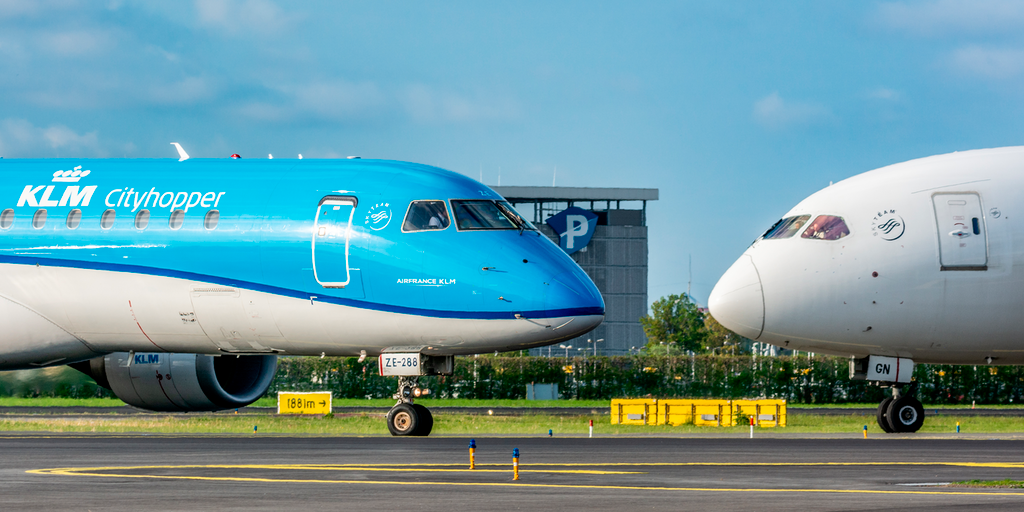
2025 Winner: Pioneer of the Year
To accelerate the adoption of sustainable aviation fuel (SAF), KLM Cityhopper, the regional subsidiary of KLM Royal Dutch Airlines, launched the SAF Scale-Up pilot featuring 100% SAF tickets. While many travelers express support for lower-emission flying, participation in voluntary SAF programs has remained limited, creating a gap between intention and action.
Rather than relying on optional contributions, KLM Cityhopper redesigned the model by embedding the full cost of SAF directly into ticket prices on selected routes. This approach shifts SAF from an add-on to a built-in component of the travel product, testing whether sustainability can become a standard expectation rather than a discretionary choice.
By doing so, the initiative directly addresses one of the core barriers to SAF adoption, which is insufficient and inconsistent demand.
Implementation: Designing and Testing the 100% SAF Ticket Model
Embedding SAF into the Ticket Price
The 100% SAF ticket model was developed to test whether passengers would accept higher fares when sustainability is integrated into the core product.
Before launch, multiple pricing concepts were explored to determine how SAF costs could be incorporated effectively. The final model applies a surcharge to all local passengers on selected routes, embedding SAF costs directly into the ticket rather than presenting them as an optional add-on. This required rethinking traditional airline pricing structures and navigating system limitations, particularly in an industry that typically relies on optional ancillary services.
The tickets were introduced in June 2025 and applied to all flights from September 2025 on the Amsterdam to London City and Amsterdam to Hamburg routes. As a result, every local passenger on these routes automatically contributed to SAF procurement.
The surcharge collected is used to fund SAF through a mass-balance system, recognizing that operating aircraft on 100% SAF is not yet technically feasible. This approach allows airlines to scale SAF usage within existing infrastructure while building demand for future supply.
Understanding Passenger Response
To support the rollout, KLM Cityhopper focused on both communication and data collection.
Cabin crews were trained as sustainability ambassadors, equipping them to explain the SAF ticket concept and engage passengers in conversation during flights. At the same time, a partnership with Skyscanner enabled the airline to track customer behavior during the booking process through targeted messaging.
In addition to digital insights, on-the-ground interviews were conducted with passengers at Amsterdam, Hamburg, and London City airports. Combining these qualitative and quantitative inputs provided a more complete understanding of how passengers perceive and respond to SAF-inclusive pricing.
Measurable Impact
Embedding SAF into the ticket price led to a significant increase in participation compared with traditional voluntary models.
These results show that when sustainability is integrated into the default experience, participation increases dramatically and generates meaningful demand for SAF.
Industry Insights
While many airlines continue to offer SAF as an optional add-on, KLM and KLM Cityhopper are among the first to test a model where the full cost of SAF is included by default on selected routes.
This approach highlights a structural challenge within aviation. SAF adoption is constrained by a cycle in which limited demand discourages production, while limited production keeps costs high. By embedding SAF into ticket pricing, this initiative strengthens demand signals to fuel producers and supports investment in scaling supply.
At the same time, it reframes the role of the passenger, shifting from optional contributor to active participant in aviation’s decarbonization efforts. This model demonstrates how airlines can move beyond symbolic sustainability options and begin integrating lower-emission solutions into the core travel experience.
For more information, visit The Aviation Challenge website.
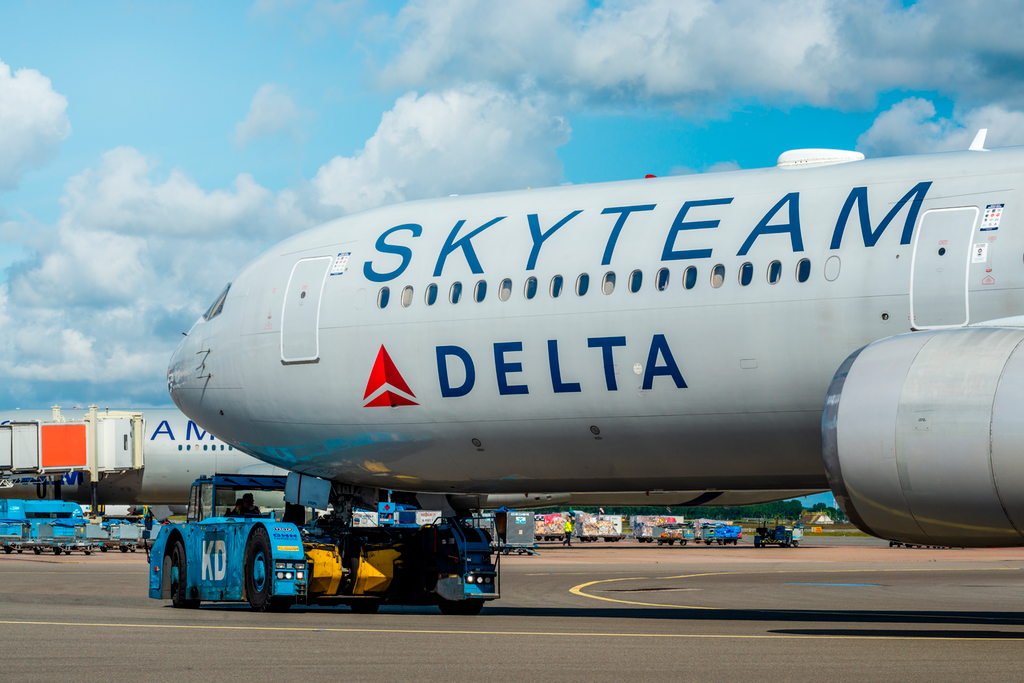
2025 Winner: Most Impactful Solution MRO
In 2025, Delta deployed foam engine core washing across seven stations in North and South America. The maintenance-based intervention reduced annual fuel burn by 1.4 million gallons while supporting reliability and maintenance performance.
Implementation Process: Deployment and Station-Level Activation
The engine foam wash program was implemented in collaboration with AeroCore, working with Delta’s Propulsion Engineering and Line Maintenance teams to develop fleet- and station-specific procedures. Following trials, tooling development, and certification for each engine fleet, deployment was prepared across selected stations.
AeroCore provided the required equipment on site, performing the wash at the gate or remote pad, with Delta technicians supporting engine access and idling. The process used nucleated foam technology that enables detergent to adhere to airfoil surfaces and penetrate deeper into the engine core. Fleet-specific tooling, developed by Delta Engineering, ensures the wash is conducted without introducing cabin odors.
Before activation at each station, Delta reviewed network deployment plans and maintenance presence, engaging local Delta and municipal leaders where required. A joint activation plan between Delta and AeroCore addressed regulatory requirements, weather conditions, and operational constraints prior to rollout.
Measurable Impact: Operational Integration and Network Expansion
Operational Impact
In 2025, 7 key stations conducted approximately 75% of all engine core washes, with over 3,300 washes completed. Three additional stations are in the process of activation, and one is under review for 2026. Once active, the foam wash process is expected to become the primary engine wash program for Delta TechOps.
Environmental Impact
Replacing the traditional water wash program results in fuel savings of up to 4 million gallons per year, directly reducing carbon emissions, operating costs, and demand on natural resources. Additionally, all wash effluent is captured and treated in compliance with local regulations to protect local water systems.
Additional Impact: Operational Integration and Cross-Functional Coordination
The program embedded fleet-specific procedures, tooling, and certification into routine maintenance operations through structured collaboration between AeroCore and Delta Engineering and Line Maintenance teams.
Industry Learnings: Scaling Engine Core Cleaning in MRO Operations
This case innovation demonstrates how engine core washing, implemented through routine maintenance, can meaningfully reduce fuel burn and associated emissions from flight operations. Expansion to additional stations and evaluation of further use cases reflect a deliberate, stepwise approach to embedding proven, high-impact MRO practices into standard operating procedures.
Delta’s case provides a practical example of how engine washing can be structured, certified, and scaled within regular maintenance operations, while leaving room for further expansion and potential environmental performance gains.
For more information, visit The Aviation Challenge website.
2025 Winner: Most Impactful Solution GroundOps
In 2025, Scandinavian Airlines Systems (SAS) improved the sustainability of its deicing and anti-icing operations by optimizing the use of mono propylene glycol (MPG) while maintaining strict safety standards. Because deicing is a safety-critical winter operation that requires large volumes of fluid, improving measurement accuracy and fluid performance offers a practical way to reduce environmental impact.
Implementation Process: Advancing Sustainable De-/Anti-Icing Practices Through Industry Collaboration
Over the past year, SAS advanced its long-term effort optimize de/anti-icing operations while maintaining safety standards. The airline evaluated methods and technologies in active use, participated in industry innovation initiatives, and set requirements for manufacturers to develop more sustainable deicing and anti-icing fluids. Collaboration across the deicing industry supported incremental improvements in fluid performance and environmental impact.
Operationally, SAS worked proactively with Liquid Water Equivalent (LWE) and Holdovertime Detection System (HOTDS) from Canadian company SureWx to improve measurement accuracy and reduce unnecessary fluid use. By relying on more precise holdover time assessments, indicating how long anti-icing fluid protects treated aircraft surfaces, the airline minimized excess application compared with conventional METAR or visibility-based approaches.
The new de/anti-icing fluid Clariant Safewing MP I LFD Plus (88) Type I has been implemented in all of Scandinavia. Existing stocks of the previous fluid, Clariant Safewing MP I Eco Plus (80) Type I, will continue to be used until depleted, which is expected to happen during the season.
By utilizing Liquid Water Equivalent (LWE) stations, SAS improved measurement accuracy in de-icing and anti-icing operations, reducing fluid over-application and lowering overall glycol use by approximately 30%. This equates savings of 250–700 liters of fluid per de/anti-icing event, resulting in an estimated 140–462 kg reduction in jet fuel burns per event based on a typical seven-minute spray time.
The introduction of the Clariant Safewing MP I LFD Plus (88) Type I fluid, with higher glycol concentration and lower water content, further reduced total fluid volumes and transport requirements, while lower foaming characteristics limited unnecessary application. Together, these changes reduced runoff in uncontrolled areas, supported greater reliance on Type I fluid over more persistent alternatives, and delivered measurable environmental and operational benefits without compromising safety.
Through Vilokan’s purification process and a Scandinavian-wide collection chain, used glycol is now returned to Clariant in Uddevalla for circular reuse. By 2024, 49% of glycol used in Scandinavia was recycled, ensuring supply security and stabilizing costs.
Improving Fluid Performance and Operational Precision
Beyond quantified savings, the updated de/anti-icing fluids were developed to meet the environmental requirements specified in Scandianvia. The reduced foaming of LFD 88 improves visibility during application, allowing operators to better assess contaminant removal and avoid overuse. This supports more precise spraying practices, enhances operational control during winter conditions, and contributes to improved runway friction as a secondary effect.
Industry Learning: Advancing Safety-Critical De-Icing Through Measurement and Process Control
SAS de/anti-icing program demonstrates how sustainability improvements can be integrated into a safety-critical function through enhanced measurement tools and process control. By replacing conventional METAR-based assessments with improved measuring methods and aligning fluid selection with environmental requirements, the initiative shows that emission and runoff reductions can be pursued without compromising operational safety.
For more information, visit The Aviation Challenge website.
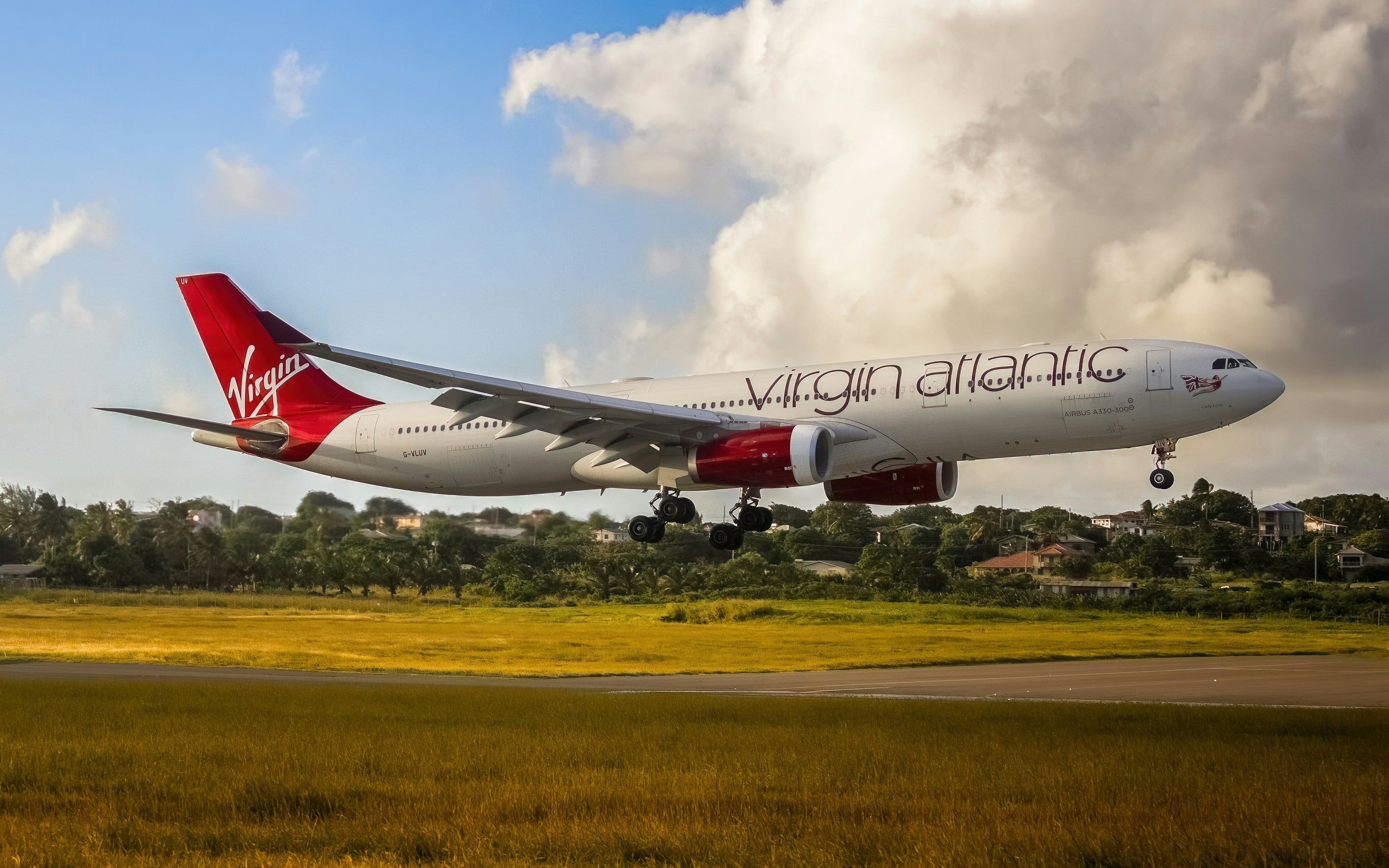
2025 Winner: Best Cross-Industry Collaboration
Under the SESAR program, Virgin Atlantic successfully conducted flight trials marking the beginning of operations, enabling progression towards future Wake Energy Retrieval (WER) capability — a concept in which one aircraft can safely fly within the aerodynamic wake of another to reduce fuel burn and emissions. While previously studied in simulations, this trial marked a critical shift from theory to real-world application.
The ambition was both simple and complex: to synchronize two commercial aircraft, operated by different airlines and departing from different airports, to meet at the same waypoint over the Atlantic at the same time. Achieving this required precise coordination across flight planning, air traffic control, and airline operations — all within existing regulatory and safety frameworks.
Between September and October 2025, 14 flights were planned, with six successfully completed. Virgin Atlantic operated four of these successful trials, with aircraft departing from London Heathrow and synchronizing in real time with partner flights from Paris and Amsterdam. These flights demonstrated that formation-based operations could be executed safely and effectively within today’s aviation systems.
Implementation Process
The collaboration brought together airlines, manufacturers, and air navigation service providers to test how formation-based flight operations could be implemented in real-world conditions.
Cross-Industry Coordination and Operational Execution
A significant amount of manual coordination was required during the flight trials, with all stakeholders working closely together to determine the requirements for future implementation.
Airbus (consortium lead) developed the digital synchronization and situational awareness tools that enabled shared decision-making across airlines and air traffic systems.
ANSPs (Air navigation service providers) in the UK, Ireland, and France authorized and monitored flight plan adaptations to ensure all operations remained within existing safety standards.
NATS (National Air Traffic Services) at London Heathrow Airport (LHR) were instrumental in enabling take-off within a tight departure window.
ANSPs in collaboration with the CAA (Civil Aviation Authority) conducted a dedicated risk assessment to confirm that all operations comply with existing regulatory requirements.
Network Managers and airports at London LHR and Paris CDG supported the timing and sequencing needed to achieve simultaneous departure and waypoint arrival pivotally.
Flight dispatchers and crews from participating airlines (Virgin Atlantic, Delta, Air France, and French Bee) coordinated departure timings and accepted dynamic flight plan adjustments to achieve precise in-air rendezvous of 2 aircrafts from different airlines over the Atlantic.
Replication and Scalability Consideration
Although the trials were conducted over the North Atlantic, the implementation was designed with global replication in mind. The procedures, communication protocols, and decision-support tools validated with Virgin Atlantic and its partners provide a structural approach that can be adaptable across different regions and traffic environments.
A key enabler of this scalability is the digital synchronization tool developed by Airbus and Eurocontrol to support collaboration between all partners. Integrated within Europe’s Network Manager platform, the tool provides a foundation that can be transferred to other regional air traffic management systems without major infrastructural change, offering a pathway toward harmonized international deployment.
By combining standardized operational procedures with shared digital tools, this approach demonstrates how formation-based flight operations can be implemented across regions, fleets, and air navigation service providers using a common coordination framework.
Measuring Impact
The trial demonstrated that complex multi-party communication and flight synchronization can be achieved safely and effectively in real-time within existing operational and regulatory frameworks.
The environmental potential is significant. Drawing on prior research, Wake Energy Retrieval could deliver up to 5% reductions in fuel burn and CO₂ emissions per flight, alongside additional benefits such as reduced contrail formation and improved aerodynamic efficiency.
Beyond emissions, the initiative also delivered meaningful operational impact. It strengthened trust and understanding across industry stakeholders, providing new insight into how airlines, manufacturers, and air navigation providers can work together more effectively. These learnings are now informing future programs, including SESAR’s GEESE project, and contributing to the development of global standards for formation-based flight.
Ultimately, this work reframes how progress can be achieved. It shows that while new technologies remain essential, there is also immediate opportunity in how the industry operates today. By aligning systems, sharing data, and coordinating more intelligently, aviation can unlock measurable emissions reductions now.
For more information, visit The Aviation Challenge website.
2025 Winner: Best Showcase Flight
In 2025, KLM organized 28 showcase flights as part of The Aviation Challenge to test a range of initiatives. One of them was to explore a critical question for aviation sustainability: How can passenger engagement help accelerate the adoption of Sustainable Aviation Fuel (SAF)?
While SAF is widely recognized as a key pathway to reducing aviation emissions, passenger awareness and participation remain limited. KLM used these showcase flights as a live testing environment to better understand how to inform, engage, and motivate passengers to take part in SAF initiatives.
Testing Incentives and Awareness Strategies
To explore how passengers respond to sustainability initiatives, KLM tested a combination of incentives and education.
One key initiative was a SAF priority boarding pilot. Passengers who chose to contribute to SAF were offered priority boarding as a tangible benefit, creating a direct link between sustainable action and passenger experience.
To support this, KLM launched a dedicated SAF information website, helping passengers understand what SAF is, why it matters, and how they can contribute. This was reinforced through a short SAF video shown in the inflight entertainment system, extending the message beyond the booking journey and into the onboard experience.
Together, these efforts were designed to make SAF more visible, understandable, and actionable for passengers.
Measuring Impact
The campaign reached passengers through a targeted email sent to 3,044 travelers. Of those, 2,421 opened the message, resulting in an open rate of nearly 80%, a strong indicator of interest and engagement. Yet only 716 people clicked on the link, so we have a major step to take in terms of action.
While awareness increased significantly, SAF purchases did not rise at the same rate during the showcase flights. This highlights a key challenge. Even when passengers are informed and engaged, converting that awareness into action requires additional drivers.
On the operational side, delivering 28 showcase flights required extensive coordination across teams and introduced communication complexities. Despite this, the initiative generated strong internal engagement, with cockpit and cabin crews expressing enthusiasm about participating in a large-scale sustainability experiment.
For more information, visit The Aviation Challenge website.
2024 Winner: Best Team Collaboration
Garuda Indonesia, in collaboration with Rekosistem, has launched an impactful initiative called "Zero Waste to Zero Emissions.” This program underscores the airline's commitment to responsible waste management while actively promoting environmental awareness among employees and stakeholders.
Dashboard for Monitoring Total Weight of Waste (Kg) x Type of Waste from Employee in 2024
A Sustainable Approach to Waste Management
As a national flag carrier, Garuda Indonesia is dedicated to pioneering sustainable aviation. Through our “Zero Waste to Zero Emission” initiative, we are taking bold steps to minimize waste, reduce carbon emissions, and promote eco-friendly operations. From adopting sustainable aviation fuel and enhancing fuel efficiency to implementing waste reduction programs on board and across our supply chain, we are committed to making air travel and business operation more responsible.
Garuda Indonesia has implemented a structured waste management system aimed at reducing landfill contributions while fostering employee engagement. The solution encourages responsible waste sorting and recycling within the company premises, ensuring that waste materials are repurposed effectively.
Through the partnership with Rekosistem, the airline has introduced educational programs and workshops to enhance employee awareness. This structured approach not only improves waste sorting efficiency but also fosters a culture environmental responsibility across the workforce.
Additionally, Garuda Indonesia has recently launched Waste Challenge Competition on March 2024 for employees, spearheaded by the internal team, Corporate Quality, Safety and Environmental Management. This competition aims to incentivize and recognize employees actively engaged in waste sorting, environmentally responsible.
On-Site Waste Management
Garuda Indonesia has also streamlined waste collection by implementing drop point facilities at its headquarters, allowing for more efficient waste management. Instead of transporting waste to external locations, this approach enables immediate sorting and recycling, further minimizing the environmental footprint.
By eliminating unnecessary transportation and improving waste collection efficiency, the airline can enhance its sustainability strategy while maintaining smooth operations. Small refinements in waste management process contribute significantly to long-term environmental impact.
Measuring Impact
To ensure accountability and track progress, Garuda Indonesia utilizes key environmental and operational metrics:
Garuda Indonesia's “Zero Waste to Zero Emission” solution highlights how structured waste management can support sustainability efforts. By the implementation of waste collection, educating employees, and utilizing advanced tracking tools, the airline ensures that waste reduction aligns with their environmental goals. Garuda Indonesia is committed to implementing sustainable practices that contribute to long-term environmental responsibility for generations to come. Together, we aim to make measurable progress toward a more sustainable world.
For more information, visit The Aviation Challenge website.
2024 Winner: Best Scaled GroundOps Solution
Air France has made significant strides in reducing its carbon footprint by transitioning its ground service equipment (GSE) from traditional fuel-powered models to electric alternatives. As of 2024, 70% of its GSE fleet in France is fully electrified. This initiative focuses on key equipment, including:
How Does This Reduce Environmental Impact?
Why Biofuels Help Reduce Environmental Impact?
Air France recognizes the importance of transitional solutions in achieving its short-term sustainability targets. To reduce its environmental impact while working toward full electrification, the airline is incorporating biofuels into its ground operations.
Focus on Air France-Owned Equipment at French Airports
The electrification initiative specifically focuses on Air France’s owned equipment, which is used primarily at French airports. By concentrating on the equipment that has the highest energy demand, Air France ensures that its solution directly addresses the largest sources of ground-based emissions.
There are some key environmental benefits at airports
Measuring The Impact
Air France’s move toward an electric ground fleet is more than just an operational shift: it represents a meaningful step toward decarbonizing aviation. While much of the industry's sustainability focus is on aircraft emissions, ground service equipment (GSE) plays a crucial role in reducing overall environmental impact.
By electrifying GSE and integrating biofuels into ground operations, Air France is:
Additionally, this dual approach of electrification and biofuel use allows Air France to make immediate sustainability gains while working toward full electrification. Noise reduction, waste minimization, and improved scalability further solidify this effort as a holistic and impactful environmental strategy.
As aviation moves toward a net-zero future, ground operations cannot be overlooked. Air France’s commitment to electrification and alternative fuels highlights how every part of the industry must evolve to create meaningful change.
For more information, visit The Aviation Challenge website.
2024 Winner: Best Approach to Scaling SAF ( Sustainable Aviation Fuel)
Kenya Airways is making progress in aviation decarbonization through the development of local Sustainable Aviation Fuel (SAF) production in Africa. Although Africa is one of the largest suppliers of SAF feedstocks globally, the continent currently lacks local SAF production capabilities.
Kenya Airways is focused on establishing local SAF production facilities, creating regulatory frameworks, and investing in necessary infrastructure. By working to eliminate the technological and financial barriers that hinder local companies from entering the SAF market, they aim to make SAF more accessible and promote it as a sustainable long-term solution for reducing aviation emissions in Africa.
Reducing Aviation's Carbon Footprint with Local SAF
By leveraging Kenya's energy infrastructure, the airline aims to increase access to more affordable SAF for other airlines. This approach not only reduces emissions associated with both the production and transport of fuel but also alleviates the environmental impact of importing SAF from distant locations.
Furthermore, it establishes a reliable and sustainable fuel source for airlines operating within Africa. An essential component of this initiative is the development of supportive policies.
In 2024, Kenya Airways played a key role in establishing the National SAF Committee, which is responsible for evaluating and updating Kenya's renewable energy policies to formally incorporate SAF. This initiative aims to secure long-term government backing, facilitating the scaling of SAF adoption throughout Kenya and potentially across the region.
Developing a Sustainable SAF Supply Chain
Kenya Airways is taking a holistic approach to SAF development, ensuring that both fuel production and feedstock cultivation align with sustainability goals. A major element of this strategy is land allocation for energy crops, in partnership with Kenya Forestry.
Measuring the Impact
Kenya Airways’ local SAF production initiative is delivering tangible environmental, economic, and social benefits, reinforcing its commitment to reducing aviation’s carbon footprint.
As SAF production scales, this model could serve as a blueprint for sustainable fuel development worldwide, helping airlines reduce their carbon footprint while ensuring long-term fuel security.
For more information, visit The Aviation Challenge website.
2025 Finalist: Best in-depth article or report
Aviation fuel often enters sustainability discussions as a carbon issue, but FuelTrack CPH, an advanced fuel monitoring campaign under the EU-funded ALIGHT project, started from a more local question: what kind of fuel are aircraft actually burning on the ground, and how does that affect air quality around the airport? Because aviation fuel comes from different crude oil sources and refining processes, its composition is not always the same. Even when conventional jet fuel still meets standard quality requirements, small differences in properties such as aromatics, sulfur, and hydrogen content can still affect emissions, especially the particle pollution released during ground operations.
To better understand that variation under real operating conditions, Scandinavian Airlines (SAS) took part in FuelTrack CPH. Working with the German Aerospace Center (DLR) and Copenhagen Airport, the campaign built a dataset that linked fuel samples from individual aircraft and the airport fueling system with real-time emissions measured during taxi. In doing so, it moved the discussion beyond fuel as a climate issue alone and toward fuel quality as a practical air-quality issue as well.
Connecting fuel samples, plume measurements, and aircraft data
The campaign relied on three core and interlinked components within airport operations:
Delivering these three components required a coordinated division of roles across the campaign partners.
Together, these roles allowed the campaign to move beyond testbench assumptions and into real operating conditions.
Measuring The Impact
Results
Over the two-week campaign, the project collected 55 fuel samples from 27 airports worldwide and paired them with 344 aircraft plume measurements across 16 SAS aircraft and five engine types. The resulting dataset reflected the operational complexity of real airport environments, where fuel origin, aircraft technology, and engine configuration all vary simultaneously.
Early observations suggested that fuel composition could meaningfully influence emissions during taxi operations. Fuel sampled directly at Copenhagen Airport showed lower aromatic content and higher hydrogen content than fuel carried on incoming aircraft on average, while emissions data revealed noticeable variation even among similar aircraft and engine types.
For more information, visit The Aviation Challenge website.
2025 Winner: Most Impactful Solution FlightOps
Air Europa implemented an integrated flight optimization approach that combines AI-powered OptiClimb climb management, performance-based aircraft allocation, and real-time flight planning using updated operational and meteorological data. The initiative targets reductions in fuel burn and emissions while improving operational performance through coordinated technical and procedural changes.
Implementation Process: Fleet-wide Deployment of AI-Driven Climb and Flight Planning Systems
In 2025, Air Europa transitioned its integrated flight optimization strategy from pilot phase to full deployment across its Boeing 737 and 787 fleets. The implementation combined three operational components: OptiClimb technology for climb phase adjustments, performance-based aircraft allocation, and real-time flight planning integrating live meteorological and aircraft performance data.
The rollout required coordinated action between flight operations, maintenance, and performance engineering teams to align flight procedures, aircraft performance parameters, and system interfaces. AI-driven climb optimization recommendations were embedded into standard flight planning workflows, with procedural updates integrated into the flight management system. Dedicated crew training ensured full familiarization prior to fleet-wide standardization.
By October 2025, more than 95% of flights were executed using AI-supported climb optimization within dynamic flight planning processes. The transition established the solution as standard operating practice across scheduled operations, delivering a reported 1.5–2.5% reduction in fuel burn per flight and a 1.2% improvement in on-time performance under variable weather conditions.
Measurable Impact: Network-Scale Environmental and Efficiency Results
Environmental Impact
Between November 2024 and October 2025, the full implementation of the integrated flight optimization process generated an estimated annual saving of 3,000 tons of fuel, corresponding to more than 10,000 tons of CO₂ emissions avoided. OptiClimb contributed average fuel savings of 80 - 120 kilograms per flight, depending on aircraft type, route, and meteorological conditions. More than 60,000 flights across the network applied AI-guided climb recommendations and real-time flight planning updates during the challenge period. Climb-phase efficiency improved by 2.1%, with smoother climb profiles also contributing to engine life preservation.
Operational and Financial Impact
Operational data show an average reduction of 0.5 minutes in flight time per sector. The combined efficiency gains translated into annual cost savings exceeding €3 million. Reported improvements also included enhanced punctuality and reliability. All results were validated through the airline’s fuel monitoring system and corroborated by the performance engineering team.
Practical Lessons: Scaling Data-Driven Optimization
In the Spring of 2025, this innovation was in initial implementation. By the Fall of 2025, it was fully deployed and embedded into standard operations across the Boeing 737 and 787 fleets, demonstrating a structured transition from limited application to network-wide integration.
This innovation underlines the role of continuous flight data analysis and cross-functional collaboration in sustaining reductions in fuel burn, CO₂, NOx, CO, and UHC, alongside punctuality and cost improvements. It also illustrates a feasible pathway for scaling AI-supported flight optimization from pilot phase to operational standard under validated monitoring.
For more information, visit The Aviation Challenge website.
2025 Winner: Most Compelling Story
Jambojet initially organized beach cleanups along the Kenyan coast to remove plastic waste from coastal environments. However, the effort remained linear, as the collected waste was sorted and ultimately discarded. Through the collaboration with Plastiki Rafiki club, a non-profit student-led club at the International School of Kenya (ISK), the initiative evolved from simple waste collection into a small circular system linking environmental action with community participation, demonstrating how plastic waste could be repurposed instead of disposed of.
Plastic waste collected from beach cleanups and Jambojet’s flight operations was transformed into upcycled items such as fridge magnets and keychains by ISK students from Plastiki Rafiki club working with artisans from the Mathare community in Nairobi. To ensure the continuous supply of the plastic, employees from Jambojet were encouraged to bring waste plastics from their houses, and Progressive Welfare Association of Malindi (PWAM), partnership with Jambojet, ensured continuous coastal cleanups, supporting the recycling process.
Overall, there have been over 1,000 kg of plastic diverted from landfills. 10 ISK students gained hands-on sustainability experience, and 15 Mathare artisans earned income themselves by contributing to the sustainability initiative. Every magnet or keychain handed to a passenger represents a cleaner ocean and a more connected community, proving that Jambojet has successfully shifted the initiative from normal beach cleanups to innovative circular movement.
Multi-Stakeholder Involvement in the Initiative Transformation Process
To expand the initiative beyond isolated cleanup activities, Jambojet engaged multiple stakeholder groups across the airline’s operations and surrounding communities. ISK students from Plastiki Rafiki contributed ideas for repurposing plastic waste, while artisans from the Mathare community in Nairobi transformed collected plastics into upcycled items such as magnets and keychains.
Within the airline, Jambojet employees participated by collecting plastic waste and volunteering in cleanup activities. At airports, passengers were invited to take part through transparent recycling bins where plastic bottles could be deposited for souvenir manufacturing. By connecting students, local artisans, employees, and passengers within a single recycling process, the initiative demonstrated how collaborative action can turn waste management into a shared sustainability effort.
Community Participation as a Driver of Circular Initiatives
The partnership of Jambojet with Plastiki Rafiki illustrates how sustainability initiatives can gain traction when multiple stakeholder groups are actively involved. By combining the ideas of students, the craftsmanship of artisans from the Mathare community, and the participation of employees and passengers, the initiative shows how small-scale actions can contribute to broader environmental awareness and local economic opportunities.
The experience also encouraged Jambojet to explore additional reuse initiatives, such as producing bag tags from retired seat covers and laptop sleeves from repurposed billboards. More broadly, the case offers insight for the aviation sector by demonstrating how waste reduction efforts can be connected with community participation and circular reuse practices. It suggests that sustainability initiatives can extend beyond operational measures by engaging employees, passengers, and local communities in practical reuse activities.
For more information, visit The Aviation Challenge website.
2025 Winner: Data & Insights Pioneer
Accurately estimating aircraft payload is a long-standing operational challenge in aviation. Traditional planning methods rely on historical averages, which can fall short on routes with highly variable passenger profiles. These inconsistencies often lead to imprecise fuel loading, where even small inaccuracies in weight estimation can result in unnecessary fuel burn. To address this, Korean Air introduced an AI-based Payload Prediction System designed to bring greater precision to payload forecasting. By analyzing real-time passenger reservation data, the system improves accuracy while reducing reliance on manual planning processes. In doing so, it directly addresses one of the most immediate levers for reducing fuel consumption: aligning aircraft weight as closely as possible to actual demand.
Improving Fuel Efficiency through Data-Driven Payload Prediction
The AI-based system uses machine learning models trained on detailed reservation data, including ratio of passenger nationality, age group, and travel itineraries to calculate expected baggage weight. By identifying patterns across these variables, the system generates more accurate payload predictions ahead of each flight.
This shift from manual estimation to data-driven forecasting allows Korean Air to align fuel loading more precisely with actual aircraft weight. By reducing the need to carry excess fuel, the airline minimizes unnecessary weight on board, which in turn lowers fuel consumption across each flight.
With improved prediction accuracy, Korean Air reduced per-flight payload deviation by 34.2%, demonstrating how more precise planning can translate directly into operational efficiency and emissions reduction.
Measuring Impact
The implementation of the AI-based Payload Prediction System is expected to deliver both environmental and financial benefits at scale.
Annual fuel savings of approximately 2.84 million pounds
Estimated cost savings of around $920,000
Reduced unnecessary fuel carriage across the network
By minimizing excess fuel load, the system reduces fuel burn on every flight, contributing to lower emissions while improving overall operational performance.
Industry Insights
Korean Air’s initiative highlights how digital innovation can unlock immediate sustainability gains within existing operations. It shows that operational data, when effectively leveraged, can replace broad assumptions with precise, real-time decision-making. Improvements at the individual flight level can scale across an entire network, delivering meaningful reductions in both fuel consumption and cost.
This approach reinforces a broader shift within aviation, where decarbonization is not only driven by future technologies, but also by smarter, data-enabled operations that can be implemented today.
For more information, visit The Aviation Challenge website.
Awarded The Most Impactful Solution – Flight Operations by the 2025 The Aviation Challenge, Air Europa implemented an integrated flight optimization approach that combines AI-powered OptiClimb climb management, performance-based aircraft allocation, and real-time flight planning using updated operational and meteorological data. The initiative targets reductions in fuel burn and emissions while improving operational performance through coordinated technical and procedural changes.
Implementation Process: Fleet-wide Deployment of AI-Driven Climb and Flight Planning Systems
in 2025, Air Europa transitioned its integrated flight optimization strategy from pilot phase to full deployment across its Boeing 737 and 787 fleets. The implementation combined three operational components: OptiClimb technology for climb phase adjustments, performance-based aircraft allocation, and real-time flight planning integrating live meteorological and aircraft performance data.
The rollout required coordinated action between flight operations, maintenance, and performance engineering teams to align flight procedures, aircraft performance parameters, and system interfaces. AI-driven climb optimization recommendations were embedded into standard flight planning workflows, with procedural updates integrated into the flight management system. Dedicated crew training ensured full familiarization prior to fleet-wide standardization.
By October 2025, more than 95% of flights were executed using AI-supported climb optimization within dynamic flight planning processes. The transition established the solution as standard operating practice across scheduled operations, delivering a reported 1.5–2.5% reduction in fuel burn per flight and a 1.2% improvement in on-time performance under variable weather conditions.
Measurable Impact: Network-Scale Environmental and Efficiency Results
Environmental Impact
Between November 2024 and October 2025, the full implementation of the integrated flight optimization process generated an estimated annual saving of 3,000 tons of fuel, corresponding to more than 10,000 tons of CO₂ emissions avoided. OptiClimb contributed average fuel savings of 80 - 120 kilograms per flight, depending on aircraft type, route, and meteorological conditions. More than 60,000 flights across the network applied AI-guided climb recommendations and real-time flight planning updates during the challenge period. Climb-phase efficiency improved by 2.1%, with smoother climb profiles also contributing to engine life preservation.
Operational and Financial Impact
Operational data show an average reduction of 0.5 minutes in flight time per sector. The combined efficiency gains translated into annual cost savings exceeding €3 million. Reported improvements also included enhanced punctuality and reliability. All results were validated through the airline’s fuel monitoring system and corroborated by the performance engineering team.
Practical Lessons: Scaling Data-Driven Optimization
In the Spring of 2025, this innovation was in initial implementation. By the Fall of 2025, it was fully deployed and embedded into standard operations across the Boeing 737 and 787 fleets, demonstrating a structured transition from limited application to network-wide integration.
This innovation underlines the role of continuous flight data analysis and cross-functional collaboration in sustaining reductions in fuel burn, CO₂, NOx, CO, and UHC, alongside punctuality and cost improvements. It also illustrates a feasible pathway for scaling AI-supported flight optimization from pilot phase to operational standard under validated monitoring.
For more information, visit The Aviation Challenge website.
2025 Winner: Pioneer of the Year
To accelerate the adoption of sustainable aviation fuel (SAF), KLM Cityhopper, the regional subsidiary of KLM Royal Dutch Airlines, launched the SAF Scale-Up pilot featuring 100% SAF tickets. While many travelers express support for lower-emission flying, participation in voluntary SAF programs has remained limited, creating a gap between intention and action.
Rather than relying on optional contributions, KLM Cityhopper redesigned the model by embedding the full cost of SAF directly into ticket prices on selected routes. This approach shifts SAF from an add-on to a built-in component of the travel product, testing whether sustainability can become a standard expectation rather than a discretionary choice.
By doing so, the initiative directly addresses one of the core barriers to SAF adoption, which is insufficient and inconsistent demand.
Implementation: Designing and Testing the 100% SAF Ticket Model
Embedding SAF into the Ticket Price
The 100% SAF ticket model was developed to test whether passengers would accept higher fares when sustainability is integrated into the core product.
Before launch, multiple pricing concepts were explored to determine how SAF costs could be incorporated effectively. The final model applies a surcharge to all local passengers on selected routes, embedding SAF costs directly into the ticket rather than presenting them as an optional add-on. This required rethinking traditional airline pricing structures and navigating system limitations, particularly in an industry that typically relies on optional ancillary services.
The tickets were introduced in June 2025 and applied to all flights from September 2025 on the Amsterdam to London City and Amsterdam to Hamburg routes. As a result, every local passenger on these routes automatically contributed to SAF procurement.
The surcharge collected is used to fund SAF through a mass-balance system, recognizing that operating aircraft on 100% SAF is not yet technically feasible. This approach allows airlines to scale SAF usage within existing infrastructure while building demand for future supply.
Understanding Passenger Response
To support the rollout, KLM Cityhopper focused on both communication and data collection.
Cabin crews were trained as sustainability ambassadors, equipping them to explain the SAF ticket concept and engage passengers in conversation during flights. At the same time, a partnership with Skyscanner enabled the airline to track customer behavior during the booking process through targeted messaging.
In addition to digital insights, on-the-ground interviews were conducted with passengers at Amsterdam, Hamburg, and London City airports. Combining these qualitative and quantitative inputs provided a more complete understanding of how passengers perceive and respond to SAF-inclusive pricing.
Measurable Impact
Embedding SAF into the ticket price led to a significant increase in participation compared with traditional voluntary models.
These results show that when sustainability is integrated into the default experience, participation increases dramatically and generates meaningful demand for SAF.
Industry Insights
While many airlines continue to offer SAF as an optional add-on, KLM and KLM Cityhopper are among the first to test a model where the full cost of SAF is included by default on selected routes.
This approach highlights a structural challenge within aviation. SAF adoption is constrained by a cycle in which limited demand discourages production, while limited production keeps costs high. By embedding SAF into ticket pricing, this initiative strengthens demand signals to fuel producers and supports investment in scaling supply.
At the same time, it reframes the role of the passenger, shifting from optional contributor to active participant in aviation’s decarbonization efforts. This model demonstrates how airlines can move beyond symbolic sustainability options and begin integrating lower-emission solutions into the core travel experience.
For more information, visit The Aviation Challenge website.
2025 Winner: Most Impactful Solution MRO
In 2025, Delta deployed foam engine core washing across seven stations in North and South America. The maintenance-based intervention reduced annual fuel burn by 1.4 million gallons while supporting reliability and maintenance performance.
Implementation Process: Deployment and Station-Level Activation
The engine foam wash program was implemented in collaboration with AeroCore, working with Delta’s Propulsion Engineering and Line Maintenance teams to develop fleet- and station-specific procedures. Following trials, tooling development, and certification for each engine fleet, deployment was prepared across selected stations.
AeroCore provided the required equipment on site, performing the wash at the gate or remote pad, with Delta technicians supporting engine access and idling. The process used nucleated foam technology that enables detergent to adhere to airfoil surfaces and penetrate deeper into the engine core. Fleet-specific tooling, developed by Delta Engineering, ensures the wash is conducted without introducing cabin odors.
Before activation at each station, Delta reviewed network deployment plans and maintenance presence, engaging local Delta and municipal leaders where required. A joint activation plan between Delta and AeroCore addressed regulatory requirements, weather conditions, and operational constraints prior to rollout.
Measurable Impact: Operational Integration and Network Expansion
Operational Impact
In 2025, 7 key stations conducted approximately 75% of all engine core washes, with over 3,300 washes completed. Three additional stations are in the process of activation, and one is under review for 2026. Once active, the foam wash process is expected to become the primary engine wash program for Delta TechOps.
Environmental Impact
Replacing the traditional water wash program results in fuel savings of up to 4 million gallons per year, directly reducing carbon emissions, operating costs, and demand on natural resources. Additionally, all wash effluent is captured and treated in compliance with local regulations to protect local water systems.
Additional Impact: Operational Integration and Cross-Functional Coordination
The program embedded fleet-specific procedures, tooling, and certification into routine maintenance operations through structured collaboration between AeroCore and Delta Engineering and Line Maintenance teams.
Industry Learnings: Scaling Engine Core Cleaning in MRO Operations
This case innovation demonstrates how engine core washing, implemented through routine maintenance, can meaningfully reduce fuel burn and associated emissions from flight operations. Expansion to additional stations and evaluation of further use cases reflect a deliberate, stepwise approach to embedding proven, high-impact MRO practices into standard operating procedures.
Delta’s case provides a practical example of how engine washing can be structured, certified, and scaled within regular maintenance operations, while leaving room for further expansion and potential environmental performance gains.
For more information, visit The Aviation Challenge website.
2025 Winner: Most Impactful Solution GroundOps
In 2025, Scandinavian Airlines Systems (SAS) improved the sustainability of its deicing and anti-icing operations by optimizing the use of mono propylene glycol (MPG) while maintaining strict safety standards. Because deicing is a safety-critical winter operation that requires large volumes of fluid, improving measurement accuracy and fluid performance offers a practical way to reduce environmental impact.
Implementation Process: Advancing Sustainable De-/Anti-Icing Practices Through Industry Collaboration
Over the past year, SAS advanced its long-term effort optimize de/anti-icing operations while maintaining safety standards. The airline evaluated methods and technologies in active use, participated in industry innovation initiatives, and set requirements for manufacturers to develop more sustainable deicing and anti-icing fluids. Collaboration across the deicing industry supported incremental improvements in fluid performance and environmental impact.
Operationally, SAS worked proactively with Liquid Water Equivalent (LWE) and Holdovertime Detection System (HOTDS) from Canadian company SureWx to improve measurement accuracy and reduce unnecessary fluid use. By relying on more precise holdover time assessments, indicating how long anti-icing fluid protects treated aircraft surfaces, the airline minimized excess application compared with conventional METAR or visibility-based approaches.
The new de/anti-icing fluid Clariant Safewing MP I LFD Plus (88) Type I has been implemented in all of Scandinavia. Existing stocks of the previous fluid, Clariant Safewing MP I Eco Plus (80) Type I, will continue to be used until depleted, which is expected to happen during the season.
By utilizing Liquid Water Equivalent (LWE) stations, SAS improved measurement accuracy in de-icing and anti-icing operations, reducing fluid over-application and lowering overall glycol use by approximately 30%. This equates savings of 250–700 liters of fluid per de/anti-icing event, resulting in an estimated 140–462 kg reduction in jet fuel burns per event based on a typical seven-minute spray time.
The introduction of the Clariant Safewing MP I LFD Plus (88) Type I fluid, with higher glycol concentration and lower water content, further reduced total fluid volumes and transport requirements, while lower foaming characteristics limited unnecessary application. Together, these changes reduced runoff in uncontrolled areas, supported greater reliance on Type I fluid over more persistent alternatives, and delivered measurable environmental and operational benefits without compromising safety.
Through Vilokan’s purification process and a Scandinavian-wide collection chain, used glycol is now returned to Clariant in Uddevalla for circular reuse. By 2024, 49% of glycol used in Scandinavia was recycled, ensuring supply security and stabilizing costs.
Improving Fluid Performance and Operational Precision
Beyond quantified savings, the updated de/anti-icing fluids were developed to meet the environmental requirements specified in Scandianvia. The reduced foaming of LFD 88 improves visibility during application, allowing operators to better assess contaminant removal and avoid overuse. This supports more precise spraying practices, enhances operational control during winter conditions, and contributes to improved runway friction as a secondary effect.
Industry Learning: Advancing Safety-Critical De-Icing Through Measurement and Process Control
SAS de/anti-icing program demonstrates how sustainability improvements can be integrated into a safety-critical function through enhanced measurement tools and process control. By replacing conventional METAR-based assessments with improved measuring methods and aligning fluid selection with environmental requirements, the initiative shows that emission and runoff reductions can be pursued without compromising operational safety.
For more information, visit The Aviation Challenge website.
2025 Winner: Best Cross-Industry Collaboration
Under the SESAR program, Virgin Atlantic successfully conducted flight trials marking the beginning of operations, enabling progression towards future Wake Energy Retrieval (WER) capability — a concept in which one aircraft can safely fly within the aerodynamic wake of another to reduce fuel burn and emissions. While previously studied in simulations, this trial marked a critical shift from theory to real-world application.
The ambition was both simple and complex: to synchronize two commercial aircraft, operated by different airlines and departing from different airports, to meet at the same waypoint over the Atlantic at the same time. Achieving this required precise coordination across flight planning, air traffic control, and airline operations — all within existing regulatory and safety frameworks.
Between September and October 2025, 14 flights were planned, with six successfully completed. Virgin Atlantic operated four of these successful trials, with aircraft departing from London Heathrow and synchronizing in real time with partner flights from Paris and Amsterdam. These flights demonstrated that formation-based operations could be executed safely and effectively within today’s aviation systems.
Implementation Process
The collaboration brought together airlines, manufacturers, and air navigation service providers to test how formation-based flight operations could be implemented in real-world conditions.
Cross-Industry Coordination and Operational Execution
A significant amount of manual coordination was required during the flight trials, with all stakeholders working closely together to determine the requirements for future implementation.
Airbus (consortium lead) developed the digital synchronization and situational awareness tools that enabled shared decision-making across airlines and air traffic systems.
ANSPs (Air navigation service providers) in the UK, Ireland, and France authorized and monitored flight plan adaptations to ensure all operations remained within existing safety standards.
NATS (National Air Traffic Services) at London Heathrow Airport (LHR) were instrumental in enabling take-off within a tight departure window.
ANSPs in collaboration with the CAA (Civil Aviation Authority) conducted a dedicated risk assessment to confirm that all operations comply with existing regulatory requirements.
Network Managers and airports at London LHR and Paris CDG supported the timing and sequencing needed to achieve simultaneous departure and waypoint arrival pivotally.
Flight dispatchers and crews from participating airlines (Virgin Atlantic, Delta, Air France, and French Bee) coordinated departure timings and accepted dynamic flight plan adjustments to achieve precise in-air rendezvous of 2 aircrafts from different airlines over the Atlantic.
Replication and Scalability Consideration
Although the trials were conducted over the North Atlantic, the implementation was designed with global replication in mind. The procedures, communication protocols, and decision-support tools validated with Virgin Atlantic and its partners provide a structural approach that can be adaptable across different regions and traffic environments.
A key enabler of this scalability is the digital synchronization tool developed by Airbus and Eurocontrol to support collaboration between all partners. Integrated within Europe’s Network Manager platform, the tool provides a foundation that can be transferred to other regional air traffic management systems without major infrastructural change, offering a pathway toward harmonized international deployment.
By combining standardized operational procedures with shared digital tools, this approach demonstrates how formation-based flight operations can be implemented across regions, fleets, and air navigation service providers using a common coordination framework.
Measuring Impact
The trial demonstrated that complex multi-party communication and flight synchronization can be achieved safely and effectively in real-time within existing operational and regulatory frameworks.
The environmental potential is significant. Drawing on prior research, Wake Energy Retrieval could deliver up to 5% reductions in fuel burn and CO₂ emissions per flight, alongside additional benefits such as reduced contrail formation and improved aerodynamic efficiency.
Beyond emissions, the initiative also delivered meaningful operational impact. It strengthened trust and understanding across industry stakeholders, providing new insight into how airlines, manufacturers, and air navigation providers can work together more effectively. These learnings are now informing future programs, including SESAR’s GEESE project, and contributing to the development of global standards for formation-based flight.
Ultimately, this work reframes how progress can be achieved. It shows that while new technologies remain essential, there is also immediate opportunity in how the industry operates today. By aligning systems, sharing data, and coordinating more intelligently, aviation can unlock measurable emissions reductions now.
For more information, visit The Aviation Challenge website.
2025 Winner: Best Showcase Flight
In 2025, KLM organized 28 showcase flights as part of The Aviation Challenge to test a range of initiatives. One of them was to explore a critical question for aviation sustainability: How can passenger engagement help accelerate the adoption of Sustainable Aviation Fuel (SAF)?
While SAF is widely recognized as a key pathway to reducing aviation emissions, passenger awareness and participation remain limited. KLM used these showcase flights as a live testing environment to better understand how to inform, engage, and motivate passengers to take part in SAF initiatives.
Testing Incentives and Awareness Strategies
To explore how passengers respond to sustainability initiatives, KLM tested a combination of incentives and education.
One key initiative was a SAF priority boarding pilot. Passengers who chose to contribute to SAF were offered priority boarding as a tangible benefit, creating a direct link between sustainable action and passenger experience.
To support this, KLM launched a dedicated SAF information website, helping passengers understand what SAF is, why it matters, and how they can contribute. This was reinforced through a short SAF video shown in the inflight entertainment system, extending the message beyond the booking journey and into the onboard experience.
Together, these efforts were designed to make SAF more visible, understandable, and actionable for passengers.
Measuring Impact
The campaign reached passengers through a targeted email sent to 3,044 travelers. Of those, 2,421 opened the message, resulting in an open rate of nearly 80%, a strong indicator of interest and engagement. Yet only 716 people clicked on the link, so we have a major step to take in terms of action.
While awareness increased significantly, SAF purchases did not rise at the same rate during the showcase flights. This highlights a key challenge. Even when passengers are informed and engaged, converting that awareness into action requires additional drivers.
On the operational side, delivering 28 showcase flights required extensive coordination across teams and introduced communication complexities. Despite this, the initiative generated strong internal engagement, with cockpit and cabin crews expressing enthusiasm about participating in a large-scale sustainability experiment.
For more information, visit The Aviation Challenge website.
2024 Winner: Best Team Collaboration
Garuda Indonesia, in collaboration with Rekosistem, has launched an impactful initiative called "Zero Waste to Zero Emissions.” This program underscores the airline's commitment to responsible waste management while actively promoting environmental awareness among employees and stakeholders.
Dashboard for Monitoring Total Weight of Waste (Kg) x Type of Waste from Employee in 2024
A Sustainable Approach to Waste Management
As a national flag carrier, Garuda Indonesia is dedicated to pioneering sustainable aviation. Through our “Zero Waste to Zero Emission” initiative, we are taking bold steps to minimize waste, reduce carbon emissions, and promote eco-friendly operations. From adopting sustainable aviation fuel and enhancing fuel efficiency to implementing waste reduction programs on board and across our supply chain, we are committed to making air travel and business operation more responsible.
Garuda Indonesia has implemented a structured waste management system aimed at reducing landfill contributions while fostering employee engagement. The solution encourages responsible waste sorting and recycling within the company premises, ensuring that waste materials are repurposed effectively.
Through the partnership with Rekosistem, the airline has introduced educational programs and workshops to enhance employee awareness. This structured approach not only improves waste sorting efficiency but also fosters a culture environmental responsibility across the workforce.
Additionally, Garuda Indonesia has recently launched Waste Challenge Competition on March 2024 for employees, spearheaded by the internal team, Corporate Quality, Safety and Environmental Management. This competition aims to incentivize and recognize employees actively engaged in waste sorting, environmentally responsible.
On-Site Waste Management
Garuda Indonesia has also streamlined waste collection by implementing drop point facilities at its headquarters, allowing for more efficient waste management. Instead of transporting waste to external locations, this approach enables immediate sorting and recycling, further minimizing the environmental footprint.
By eliminating unnecessary transportation and improving waste collection efficiency, the airline can enhance its sustainability strategy while maintaining smooth operations. Small refinements in waste management process contribute significantly to long-term environmental impact.
Measuring Impact
To ensure accountability and track progress, Garuda Indonesia utilizes key environmental and operational metrics:
Garuda Indonesia's “Zero Waste to Zero Emission” solution highlights how structured waste management can support sustainability efforts. By the implementation of waste collection, educating employees, and utilizing advanced tracking tools, the airline ensures that waste reduction aligns with their environmental goals. Garuda Indonesia is committed to implementing sustainable practices that contribute to long-term environmental responsibility for generations to come. Together, we aim to make measurable progress toward a more sustainable world.
For more information, visit The Aviation Challenge website.
2024 Winner: Best Scaled GroundOps Solution
Air France has made significant strides in reducing its carbon footprint by transitioning its ground service equipment (GSE) from traditional fuel-powered models to electric alternatives. As of 2024, 70% of its GSE fleet in France is fully electrified. This initiative focuses on key equipment, including:
How Does This Reduce Environmental Impact?
Why Biofuels Help Reduce Environmental Impact?
Air France recognizes the importance of transitional solutions in achieving its short-term sustainability targets. To reduce its environmental impact while working toward full electrification, the airline is incorporating biofuels into its ground operations.
Focus on Air France-Owned Equipment at French Airports
The electrification initiative specifically focuses on Air France’s owned equipment, which is used primarily at French airports. By concentrating on the equipment that has the highest energy demand, Air France ensures that its solution directly addresses the largest sources of ground-based emissions.
There are some key environmental benefits at airports
Measuring The Impact
Air France’s move toward an electric ground fleet is more than just an operational shift: it represents a meaningful step toward decarbonizing aviation. While much of the industry's sustainability focus is on aircraft emissions, ground service equipment (GSE) plays a crucial role in reducing overall environmental impact.
By electrifying GSE and integrating biofuels into ground operations, Air France is:
Additionally, this dual approach of electrification and biofuel use allows Air France to make immediate sustainability gains while working toward full electrification. Noise reduction, waste minimization, and improved scalability further solidify this effort as a holistic and impactful environmental strategy.
As aviation moves toward a net-zero future, ground operations cannot be overlooked. Air France’s commitment to electrification and alternative fuels highlights how every part of the industry must evolve to create meaningful change.
For more information, visit The Aviation Challenge website.
2024 Winner: Best Approach to Scaling SAF ( Sustainable Aviation Fuel)
Kenya Airways is making progress in aviation decarbonization through the development of local Sustainable Aviation Fuel (SAF) production in Africa. Although Africa is one of the largest suppliers of SAF feedstocks globally, the continent currently lacks local SAF production capabilities.
Kenya Airways is focused on establishing local SAF production facilities, creating regulatory frameworks, and investing in necessary infrastructure. By working to eliminate the technological and financial barriers that hinder local companies from entering the SAF market, they aim to make SAF more accessible and promote it as a sustainable long-term solution for reducing aviation emissions in Africa.
Reducing Aviation's Carbon Footprint with Local SAF
By leveraging Kenya's energy infrastructure, the airline aims to increase access to more affordable SAF for other airlines. This approach not only reduces emissions associated with both the production and transport of fuel but also alleviates the environmental impact of importing SAF from distant locations.
Furthermore, it establishes a reliable and sustainable fuel source for airlines operating within Africa. An essential component of this initiative is the development of supportive policies.
In 2024, Kenya Airways played a key role in establishing the National SAF Committee, which is responsible for evaluating and updating Kenya's renewable energy policies to formally incorporate SAF. This initiative aims to secure long-term government backing, facilitating the scaling of SAF adoption throughout Kenya and potentially across the region.
Developing a Sustainable SAF Supply Chain
Kenya Airways is taking a holistic approach to SAF development, ensuring that both fuel production and feedstock cultivation align with sustainability goals. A major element of this strategy is land allocation for energy crops, in partnership with Kenya Forestry.
Measuring the Impact
Kenya Airways’ local SAF production initiative is delivering tangible environmental, economic, and social benefits, reinforcing its commitment to reducing aviation’s carbon footprint.
As SAF production scales, this model could serve as a blueprint for sustainable fuel development worldwide, helping airlines reduce their carbon footprint while ensuring long-term fuel security.
For more information, visit The Aviation Challenge website.